“I am not a traitor”
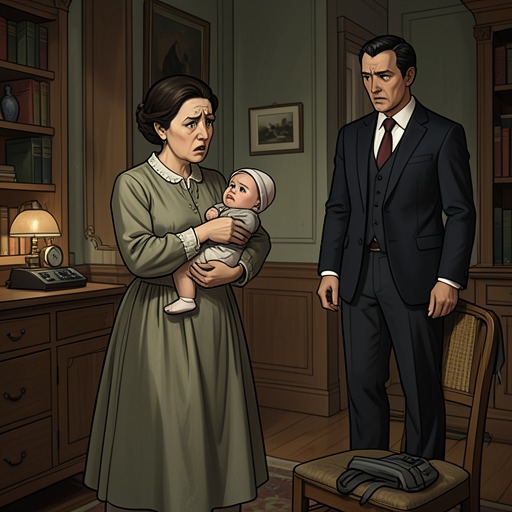
The Time Traveler's Wife“I am not a traitor” is Henry DeTamble’s repeated self-reassurance before a vasectomy he has chosen in secret. The words frame an act of protection as a moral conflict: he believes he is sparing Clare and a possible child from suffering, yet knows that making the decision without her risks betraying their shared desire for a family.
The phrase in the waiting room
In June 2000, Henry waits for an appointment with Dr. Robert Gonsalez on Sheridan Road, having decided to undergo a vasectomy without telling Clare. He imagines the procedure as a necessary good, but his thoughts return to the possibility that it will hurt Clare and to the memory of her earlier grief during their attempts to conceive. The refrain “I am not a traitor” is not an announcement to Clare or a promise made to her; it is a private argument Henry repeats to steady himself.
The waiting room’s ordinary details sharpen the isolation of the choice. Henry sits among other men, notices a teenager reading an old copy of Esquire, and tries to imagine himself in a bar rather than facing the appointment. When he is called, he becomes physically unwell and is displaced in time to the clearing, before he can enter the examining room. The procedure is interrupted, but the decision and its secrecy remain consequential.
A desire shadowed by uncertainty
The earlier context for Henry’s choice is the couple’s decision, around 1996, to try for a baby. Clare remembers being consumed by the prospect of a child and imagining the baby’s appearance and everyday life. At the same time, she avoids asking why Henry is pessimistic about their chances. She fears he may have seen a future without a child and worries that his time-travel condition could be hereditary or could affect a pregnancy. Her longing and her deliberate refusal to dwell on these possibilities coexist from the beginning.
The later vasectomy decision is therefore bound to a history of hope and fear, not simply to Henry’s wish to end parenthood. He thinks of Clare’s earlier distress and concludes that he is acting to spare her further pain. Yet his repeated denial of betrayal signals that he understands the choice has another side: he is making a consequential decision for both of them without her knowledge.
The failed safeguard and its aftermath
The couple’s different experiences of time make Henry’s choice especially fraught. In 1997, Clare tells him she is pregnant. For her, the conception was only weeks earlier; for Henry, it belongs to the period in 1996 when they were actively trying. He recognizes how the pregnancy occurred and responds with a light remark, while their shared history of wanting a child gives the news its force.
Clare’s pregnancy later brings the risks and emotional stakes of parenthood into the present. During labor, Henry sits holding her hand as medical staff attend to her and the fetal monitor indicates that their daughter is distressed. Years afterward, when Henry asks Clare to allow genetic research using Alba’s DNA, he describes the possibility that Alba might not want the difficulties associated with time travel and says he wants to leave her a safety net. Clare, weeping, agrees. These later choices do not erase the earlier secrecy; together, they show Henry repeatedly trying to protect the people he loves from a future he cannot control.
Meaning and recurrence
The refrain’s force comes from its repetition. Henry invokes it while preparing to act, as if naming himself a traitor could make the charge answerable; the surrounding scene instead leaves the tension unresolved. His intention is protective, but protection is entangled with unilateral choice, fear, and the couple’s uncertain reproductive future.
Across the related moments, the phrase marks no simple rejection of fatherhood. It sits between Clare’s intense desire for a baby, the couple’s attempts to conceive, Henry’s covert attempt to prevent further pregnancies, and his later effort to help Alba. Its central contradiction is that Henry tries to defend his family by deciding what they should be spared, while the family’s future continues to exceed what he can foresee or prevent.